
What can seven ancient foods teach us about nourishment, gratitude, and God’s abundant care? Discover the timeless gifts of the Promised Land—and the meaningful ways they can enrich body and soul today.
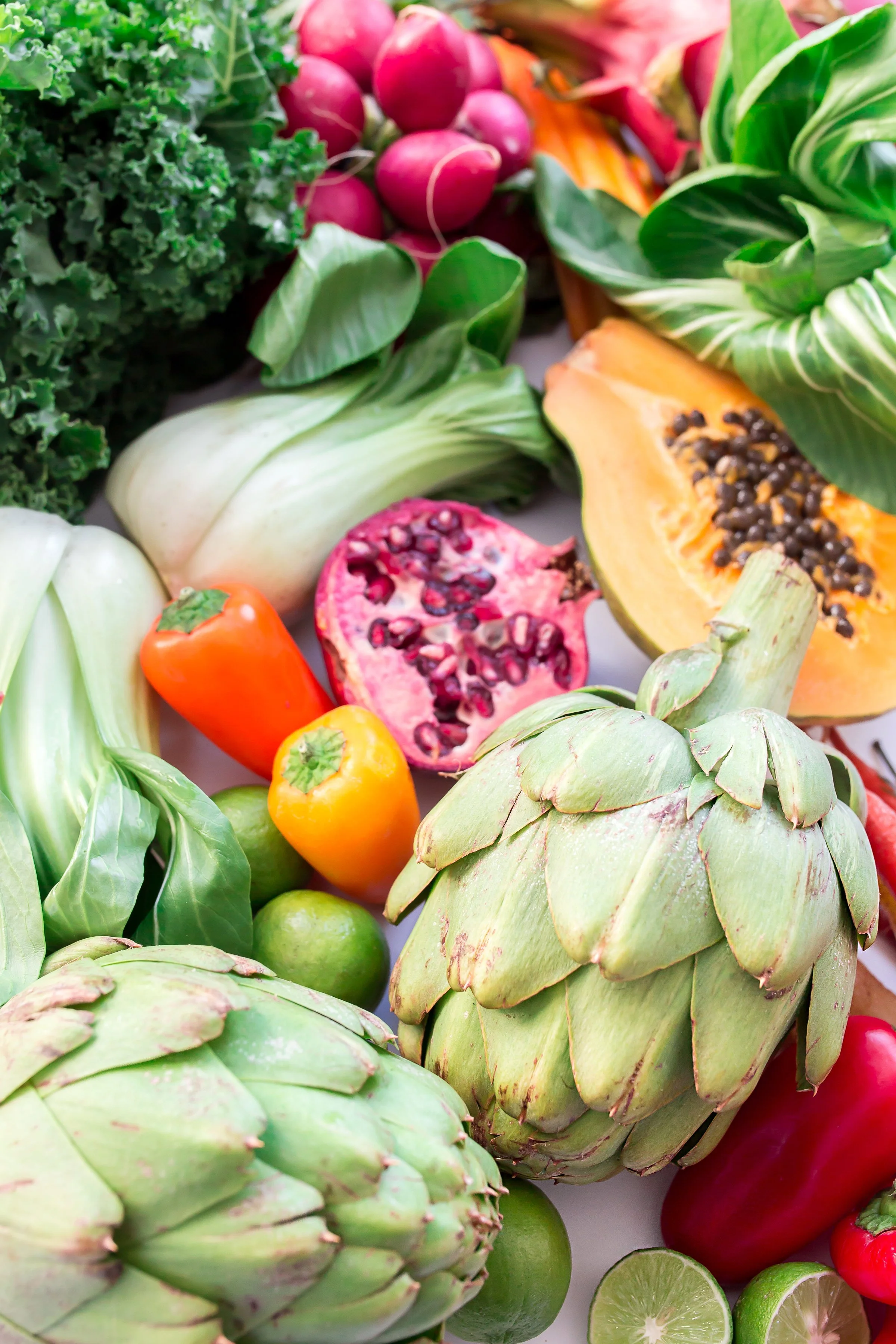
Deuteronomy 8:7-8, For the Lord your God is bringing you into a good land, a land of brooks of water, of fountains and springs, that flow out of valleys and hills; 8a land of wheat and barley, of vines and fig trees and pomegranates, a land of olive oil and honey.
Psalm 65:11, You crown the year with Your goodness. And Your paths drip with abundance.
Created in the image of a perfect and loving God (Genesis 1:27), each of us bears a unique design that cannot be replicated. Scripture reminds us that He daily loads us with benefits (Psalm 68:19) and richly provides everything for our enjoyment (1 Timothy 6:17). His generosity is evident not only in spiritual blessings, but also in the nourishing foods of the earth.
In Deuteronomy 8:7–8, the Promised Land is described as a place of water, grain, fruit, olive oil, and honey. This article explores seven foods associated with that abundance: wheat, barley, grapes, figs, pomegranates, olives, and dates. Together, they offer a beautiful picture of God’s provision and invite us to receive His gifts with gratitude.
WHEAT.
Ezekiel 4:9 — “Take wheat and barley, beans and lentils, millet and spelt; put them in a storage jar and use them to make bread for yourself.”
John 6:35 — Jesus said, “I am the bread of life. He who comes to Me shall never hunger, and he who believes in Me shall never thirst.”
Matthew 6:11 — “Give us this day our daily bread.”
Wheat has long symbolized daily provision and sustenance. Whole-grain wheat provides fiber and nutrients such as magnesium, selenium, and B vitamins. At the table, bread can serve as a simple reminder that both physical and spiritual nourishment are gifts from God.
Barley.
John 6:9–13 recounts how Jesus gave thanks for five barley loaves and two fish, fed the crowd, and instructed His disciples to gather the leftovers so that nothing would be wasted. Barley—an ordinary food placed in Christ’s hands—became part of an extraordinary display of gratitude, provision, and abundance.
GRAPES.
Genesis 27:28 — “Therefore may God give you of the dew of heaven, of the fatness of the earth, and plenty of grain and wine.”
Psalm 104:15 describes wine that gladdens the heart, oil that makes the face shine, and bread that strengthens the heart.
Grapes provide vitamin C and plant compounds such as polyphenols. Whether enjoyed fresh or dried as raisins, they offer natural sweetness and energy—and they echo Scripture’s imagery of fruitfulness, joy, and blessings.
FIGS.
1 Samuel 30:12 — After receiving a cake of figs and two clusters of raisins, a weary man ate and regained his strength.
Naturally sweet and satisfying, figs provide fiber and minerals such as calcium and iron. Their mention in this story is also a tender reminder that practical nourishment can be an expression of compassion and restoration.
Pomegranates.
A symbol of love and fruitfulness
Song of Solomon 4:13 — “Your plants are an orchard of pomegranates with pleasant fruits.”
With their jewel-like seeds, pomegranates are rich in vitamin C and polyphenols. Their beauty and abundance make them a fitting biblical image of love, fruitfulness, and the generous creativity of God.
Olives.
A symbol of blessings and flourishing
Psalm 128:3 — “Your wife shall be like a fruitful vine in the very heart of your house, your children like olive plants all around your table.”
Olives and olive oil contain monounsaturated fats and vitamin E. In Scripture, the olive tree frequently evokes blessing, endurance, peace, and flourishing—an enduring image of a life rooted in God’s care.
Dates.
2 Samuel 6:19 describes David distributing food to the people after worship and celebration. Some translations and traditions understand part of the gift as a cake of dates or dried fruit.
Translation wording varies; consult the Bible translation you use when quoting this passage.
Dates are naturally sweet, versatile, and a source of fiber and minerals. They can be enjoyed whole, added to recipes, or used to sweeten foods. Their concentrated sweetness offers a fitting final picture of the goodness that can be found in God’s provision.
Receiving God’s Good Gifts with Gratitude
These seven foods invite us to see nourishment as more than fuel. They point toward provision, fruitfulness, strength, celebration, and care. As we choose wholesome foods and share them with others, we can pause to thank the One from whom every good gift comes.
My Greek Sense-ability Salad
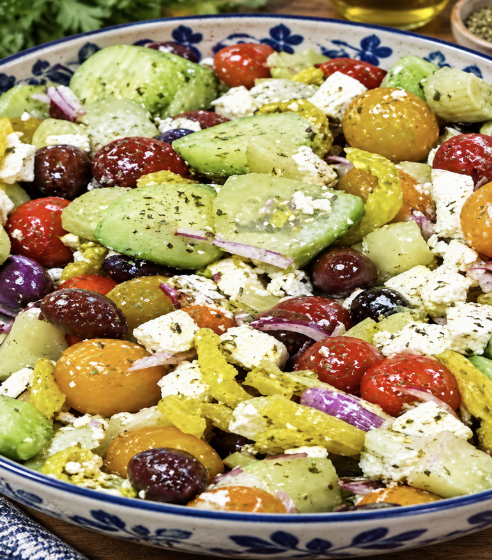
This salad has its own unique name, and like all names, it has a meaning. Whether I am preparing it for 4, 8, or 28 people, the ingredients remain the same. I do not measure or count specifics; instead, I judge by sight, smell, and taste—the ability of my senses, my sense ability. To simplify things, however, I have included measurements as a starting point. They are not written in stone. Give your senses ABILITY and enjoy the abundance of God’s love and goodness.
My Greek Sense-ability Salad
Prep time: 15 minutes | Level of difficulty: Easy | Serves: 4Ingredients
1-2 cups Cherry, Grape, or Assorted Tomatoes
2 English Cucumbers, peeled, sliced, or chunked according to your liking
½ cup Small Red Onion, sliced thin into 1” slivers
½-1 cup Jar Banana Pepper Rings, drained
1-2 8-Oz Jar Quartered, Artichoke Hearts, or whole baby, drained
½-1 cup Pitted Kalamata Olives, whole
½-1cups Feta Cheese, diced or crumbled
DRESSING
¼ - ½ cup Olive Oil, EVOO *see notes
¼ cup Red Wine Vinegar
1/8 cup Fresh Lemon Juice
SPICES
½-1 Tablespoon Oregano, the main spice, even if you do not add any other spice, Oregano is a must
½ Tablespoon Italian Herbs Blend with Garlic of your choice, I like one that has added poppy seeds and sesame seeds
Pepper to taste
Salt if you like, but Feta is salty
DIRECTIONS
Add non-liquid ingredients in order listed, except spices, into a large bowl and set aside.
Add the dressing ingredients and spices into a salad dressing jar or bottle, starting with the lower measurements. Add more later when you taste test if you like. Cover, seal, and give it a good shake.
Drizzle the dressing onto the salad ingredients and gently toss the salad to blend.
Taste to adjust to your liking, if needed.
ENJOY!
KALI OREXI! BON APPETIT! (Healthy Appetite)
Reflection: Which of these foods could you enjoy this week as a simple reminder of God’s abundance?
This recipe of the Promised Land Salad is filled with God’s good ingredients to enjoy like FIGS, DATES, GRAIN, and POMEGRANATES.
Promised Land Salad — Tina Poulos
In my Traditional Greek Easter Bread recipe post, I reflect on how bread nourishes the body while Jesus—the Bread of Life—sustains the soul.
NOTES
Olive Oil-using a quality olive oil, extra virgin, cold pressed and from one source. Many olive oils are sourced from multiple places which decreases the quality of the oil. Like a story, by the time it gets to the 3rd person, it has changed.
Dressing-start with a drizzle and keep pouring, checking for taste and amount. You do not want a soggy, wet salad.
If you want, you can add 1-1/2 cups cooked Tortellini or Bow Tie Pasta to create a Pasta Greek Salad
I understand that it is not always easy, but I try to live by the following 3 principles of Biblical Wellness:
1. Eat the foods God calls good. The way He created them. (not processed)
2. Eat foods as close as you can to God’s way.
3. Do not let any food become your idol.
Do not stress—simply enjoy all that God has given us while doing your best to care for your health and your family.
Reflection:
Which of these foods could you enjoy this week as a simple reminder of God’s abundance?
This recipe of the Promised Land Salad is filled with God’s good ingredients to enjoy like FIGS, DATES, GRAIN, and POMEGRANATES.
Promised Land Salad — Tina Poulos
In my Traditional Greek Easter Bread recipe post, I reflect on how bread nourishes the body while Jesus—the Bread of Life—sustains the soul.
Tsoureki - Traditional Greek Easter Bread — Tina Poulos